

High blood pressure rarely announces itself. Most people feel well, go about their day, and discover elevated readings only at a routine blood pressure check, or worse, after a cardiovascular event. That’s what makes hypertension one of the most dangerous chronic conditions — not because it’s dramatic, but because it’s quiet for years.
Understanding your blood pressure chart, knowing what normal blood pressure looks like, and learning which blood pressure medications are available puts you in a position to ask better questions and make smarter decisions. This post covers the numbers, the drug classes, the home strategies, and the honest limits of self-management.
At BioSyntrx Medical Center, our cardiology team works with patients across San Francisco who are newly diagnosed, currently medicated but not well controlled, or simply trying to understand what their readings mean. Evidence-based care and clear communication guide every evaluation we conduct.
What Is Hypertension and What Does a Blood Pressure Chart Actually Show?
A blood pressure reading measures two forces: systolic pressure, the upper number recorded when your heart beats, and diastolic pressure, the lower number recorded when your heart rests between beats. Both numbers matter. The blood pressure chart used in clinical settings categorizes readings into ranges that tell providers how urgently to act.
Normal blood pressure sits below 120/80 mmHg. Elevated blood pressure is 120–129 systolic with diastolic under 80. Stage 1 hypertension starts at 130/80 mmHg, and Stage 2 at 140/90 mmHg or higher. A hypertensive crisis, which requires emergency evaluation, is any reading above 180/120 mmHg. According to the CDC, nearly half of adults in the United States have hypertension, yet many remain unaware of it.
“High blood pressure is sometimes called the ‘silent killer’ because it typically has no warning signs or symptoms, and many people don’t know they have it.”
Reading a blood pressure chart is not complicated, but interpreting what your numbers mean for you specifically depends on age, kidney function, cardiac history, and other factors. A single elevated reading at home doesn’t confirm hypertension. Consistent readings above 130/80 on a blood pressure monitor over several days, however, warrant a clinical blood pressure check with a provider. In our practice we’ve seen patients spend months anxious about a single high reading when the pattern, tracked over time, was well within a manageable range.
What Is the Best Medicine for High Blood Pressure?
The best blood pressure medication depends on your clinical picture. No single drug works for everyone. Providers typically start with one of four first-line medication classes: thiazide diuretics, ACE inhibitors, angiotensin receptor blockers (ARBs), or calcium channel blockers. Each works through a different mechanism, and each carries its own side effect profile.
Thiazide diuretics like hydrochlorothiazide reduce fluid volume in the bloodstream. ACE inhibitors such as lisinopril and enalapril relax blood vessels by blocking a hormone that causes them to narrow. ARBs including losartan and valsartan work similarly but through a slightly different pathway, one that avoids the dry cough some patients develop on ACE inhibitors. Calcium channel blockers like amlodipine prevent calcium from entering heart and vessel muscle cells, reducing the force of contraction. Choosing among them depends on whether you have diabetes, heart failure, kidney disease, or other conditions that make certain agents more appropriate.
What Are the 4 Best Blood Pressure Drugs?
Clinical guidelines consistently point to four classes as first-line treatment for most adults with hypertension. These agents have the strongest long-term outcomes data and are generally well tolerated as starting therapies.
- Thiazide diuretics (hydrochlorothiazide, chlorthalidone): reduce fluid volume; decades of outcomes data supporting cardiovascular protection
- ACE inhibitors (lisinopril, ramipril): especially effective in patients with diabetes or chronic kidney disease
- Angiotensin receptor blockers (ARBs) (losartan, olmesartan): similar efficacy to ACE inhibitors with fewer cough-related side effects
- Calcium channel blockers (amlodipine, nifedipine): effective across diverse patient populations; often preferred for older adults
Many patients require two or more agents to reach their blood pressure goal, which is normal and not a sign of treatment failure. Combination therapy at lower doses is often better tolerated than escalating a single medication to its maximum dose. The cardiology and specialty services at BioSyntrx Medical Center include medication management for patients who haven’t achieved control on an initial regimen, including structured medication trials and close monitoring during transitions.
What Are the Worst Blood Pressure Drugs to Take?
There’s no universal “worst” list, because drug tolerability is individual. That said, certain older classes are generally considered second or third-line today because of their side effect profiles compared to newer options.
Alpha-blockers like doxazosin aren’t typically used alone for hypertension anymore because they don’t reduce cardiovascular events as effectively as other classes when used as monotherapy. Beta-blockers such as metoprolol and atenolol have fallen somewhat out of favor as first-line agents for uncomplicated hypertension, though they remain essential for patients with heart failure, post-myocardial infarction recovery, or certain arrhythmias. Central-acting agents like clonidine can cause significant rebound hypertension if stopped abruptly without tapering. None of these are universally dangerous, but they’re generally not where providers start for straightforward hypertension management.
“Blood pressure medications are highly effective, but finding the right drug or combination may take some trial and adjustment. Working closely with your healthcare provider leads to better outcomes than adjusting on your own.”
Immediate Treatment for High Blood Pressure at Home
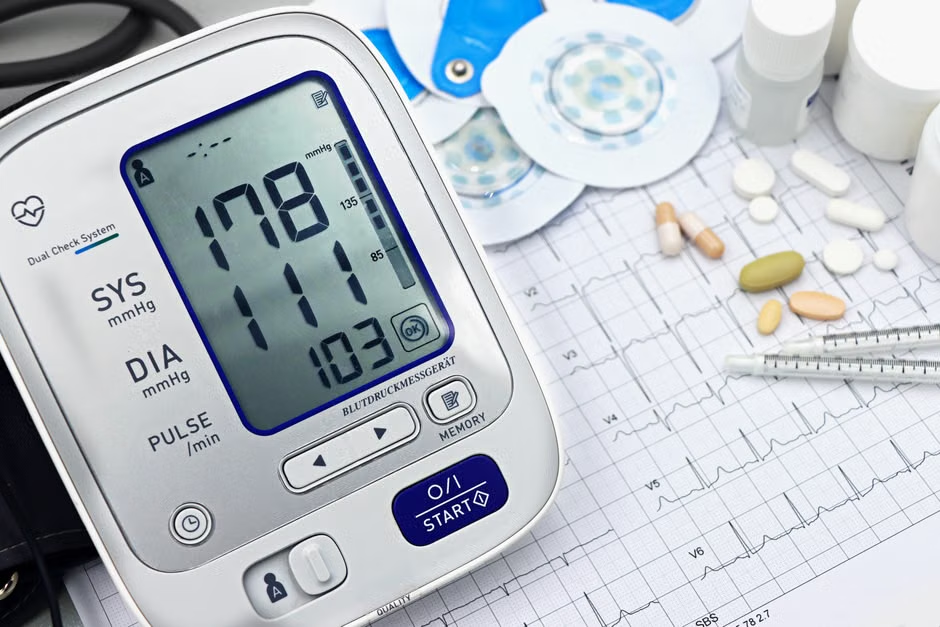
If your blood pressure machine for home shows a reading above 180/120 mmHg, especially alongside symptoms like chest pain, shortness of breath, severe headache, or sudden vision changes, that’s a hypertensive crisis. It requires emergency care, not a home remedy. Call 911 or go to an emergency room right away.
For readings in the elevated-to-Stage-2 range without symptoms, evidence-supported lifestyle changes can meaningfully lower blood pressure over days to weeks. These aren’t substitutes for medication when medication is indicated, but they work alongside it and sometimes reduce the dose required:
- Reduce sodium intake to under 2,300 mg daily, ideally 1,500 mg for those already diagnosed with hypertension
- Increase potassium-rich foods including leafy greens, bananas, beans, and potatoes
- Get 30 minutes of moderate aerobic activity on most days of the week
- Limit alcohol to one drink per day for women, two for men
- Manage stress through structured techniques like deep breathing, progressive muscle relaxation, and consistent sleep schedules
- Quit smoking, which causes immediate blood pressure spikes and long-term vascular damage
These steps are not a substitute for medical evaluation. If your blood pressure consistently reads in Stage 2 territory at home, a clinical evaluation is the next step. Lifestyle changes alone are unlikely to bring those numbers to goal without medication support.
Who May Not Need Blood Pressure Medication Right Away
Not every elevated reading leads immediately to a prescription. Patients with Stage 1 hypertension (130–139/80–89 mmHg) and no additional cardiovascular risk factors are often candidates for a supervised trial of lifestyle modification before medication begins. Providers calculate 10-year cardiovascular risk using validated tools, and for lower-risk patients, three to six months of documented lifestyle effort is a reasonable approach before escalating to drugs.
White coat hypertension, where readings are elevated in clinical settings but normal at home, is another important consideration. Ambulatory blood pressure monitoring, which tracks readings continuously over 24 hours, can distinguish true hypertension from anxiety-driven spikes. Prescribing lifelong medication for white coat hypertension exposes patients to side effects and cost without cardiovascular benefit. Accurate diagnosis matters more than a quick script. That’s a core principle at BioSyntrx Medical Center, where our physicians take the time to understand each patient’s full picture before recommending treatment.
What to Expect from Blood Pressure Treatment: A Realistic Timeline
Most blood pressure medications reach their full effect within two to four weeks. Some patients see a meaningful drop within days. The clinical target is usually below 130/80 mmHg for most adults, with slight variation based on age and concurrent conditions. Your provider will specify your personal goal.
Side effects often improve in the first few weeks as your body adjusts. If they don’t, switching within or between drug classes is straightforward and common. Most patients try two or three agents before landing on one that controls their readings with minimal side effects. This is routine medical management, not failure.
Jean Terry, clinical healthcare educator at BioSyntrx Medical Center, notes that patients who track their readings at home and bring those logs to appointments tend to see faster medication adjustments and better long-term outcomes than those who rely only on single in-office readings. Your blood pressure monitor is a tool. Use it consistently.
Practical Tips for Accurate Home Blood Pressure Monitoring
- Measure at the same time daily, ideally in the morning before taking medications and again in the evening
- Sit quietly for five minutes before measuring, feet flat on the floor, arm resting at heart level
- Take two readings one minute apart and record the average
- Avoid caffeine, exercise, and smoking for 30 minutes before measuring
- Use a validated upper-arm cuff rather than a wrist monitor for greater accuracy
- Bring your blood pressure machine to a clinic visit at least once per year to confirm its readings match professional equipment
Hypertension is manageable. For most people, it requires a combination of medication, consistent monitoring, and honest conversations with a provider who knows your full medical history. Our multi-specialty care team at BioSyntrx Medical Center
