

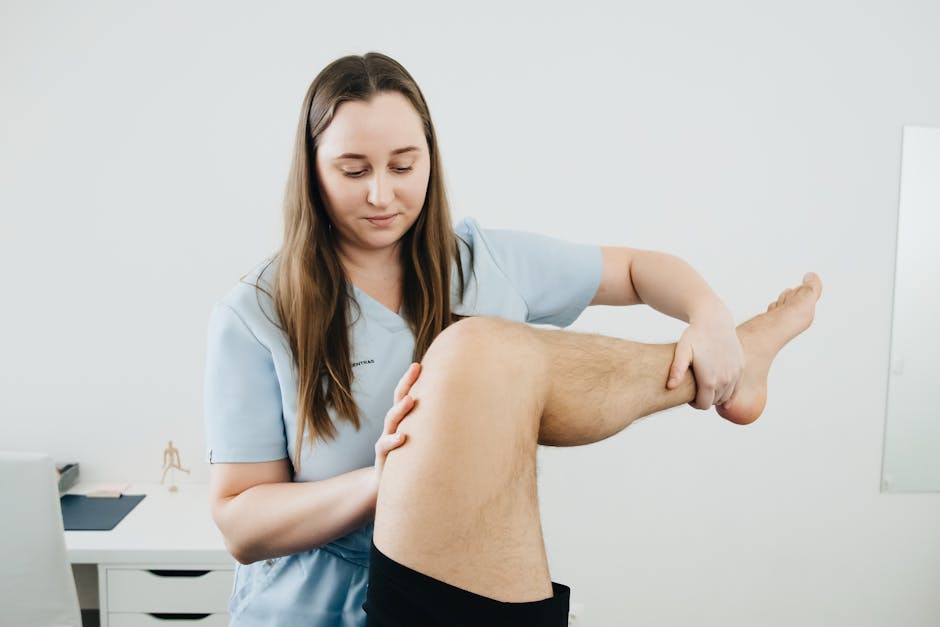
Knee ache treatment begins with one honest question: what’s actually causing the pain? That sounds simple. It’s not. The knee is one of the body’s most complex joints, layered with ligaments, cartilage, bone, and fluid sacs that all generate overlapping symptoms when something goes wrong. A dull ache after a long walk can mean early arthritis, a strained ligament, or a cartilage problem that’s been quietly worsening for months.
Many patients describe the same experience: pain, swelling, stiffness, a feeling that the knee isn’t quite right. Without an accurate clinical evaluation, guessing at the cause leads to the wrong treatment, slow recovery, and sometimes permanent damage. That’s why understanding the three most common sources of knee pain, ACL injury, meniscus tears, and osteoarthritis, matters before choosing any path forward.
At BioSyntrx Medical Center, our orthopedic team has guided thousands of patients through exactly this process. If you’re dealing with persistent knee pain in San Francisco, getting an accurate assessment early makes every difference. You can review the full range of orthopedic and specialist services we offer to understand what a coordinated evaluation looks like.
What Is Actually Happening Inside a Painful Knee
The knee relies on four main structures to keep it stable and mobile: the anterior cruciate ligament (ACL), the posterior cruciate ligament (PCL), the medial and lateral menisci, and the articular cartilage covering the ends of the femur and tibia. When any of these break down, whether through acute injury or gradual wear, pain follows. The location of that pain, how it started, and what makes it worse are the first clues a clinician uses to narrow the diagnosis.
According to Mayo Clinic, knee pain can originate from the bones, cartilage, ligaments, tendons, or bursae surrounding the joint, and accurate diagnosis depends on distinguishing structural damage from inflammatory conditions. That distinction changes everything about treatment.
“Knee pain is one of the most common complaints seen in orthopedic practice. Several conditions produce nearly identical symptoms, which is why imaging and physical examination together are essential for accurate diagnosis.”
How to Tell if Knee Pain Is from a Torn Meniscus or Arthritis
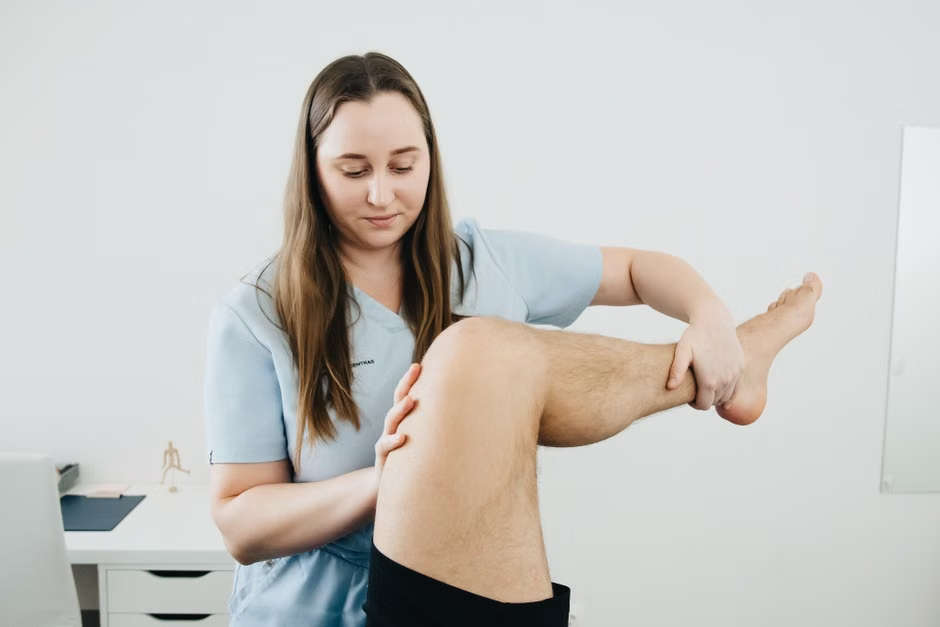
A torn meniscus and osteoarthritis both cause pain, stiffness, and swelling, but they behave differently. Meniscus tears typically follow a specific injury event, produce joint-line tenderness, and may cause locking or clicking sensations. Osteoarthritis develops gradually, worsens with weight-bearing activity, and produces diffuse stiffness, especially in the morning.
Meniscus tears most often result from a twisting motion, a sudden change of direction, or squatting under load. Pain sits directly along the inner or outer edge of the knee. Sometimes the joint catches or gives way mid-movement. Arthritis pain tends to spread across the front or the entire knee, builds with activity, and eases with rest, at least in earlier stages.
An MRI is the most reliable tool for confirming a meniscus tear. X-rays showing joint space narrowing remain the standard for staging osteoarthritis. Many patients over 40 have both conditions simultaneously, which complicates treatment planning considerably. That’s exactly why a clinical evaluation, not a self-diagnosis, should come first.
What Are the 4 Stages of Osteoarthritis?
Osteoarthritis of the knee is classified in four stages based on X-ray findings and symptom severity. Stage 1 shows minor bone spurs with little to no pain. Stage 2 includes more visible spurs and occasional discomfort, though cartilage remains mostly intact. Stage 3 involves evident cartilage erosion and frequent pain during daily activities. Stage 4 is severe, with significant joint space loss, bone-on-bone contact, and near-constant pain.
Recognizing your stage matters because treatment differs at each level. According to the National Institutes of Health, early-stage osteoarthritis responds well to physical therapy, weight management, anti-inflammatory medications, and activity modification. Later stages may require corticosteroid or hyaluronic acid injections, or a surgical evaluation. Stage 4 often leads to joint replacement discussions.
In our clinic, we’ve seen patients arrive at Stage 2 or 3 who had dismissed their symptoms for years as normal aging. Early evaluation allows us to slow progression and preserve function longer. Waiting until pain becomes intolerable usually narrows the treatment options significantly.
ACL Arthritis Symptoms: What Happens After an ACL Injury
An ACL tear doesn’t just cause immediate instability. Over time, it changes joint mechanics in ways that accelerate cartilage breakdown. The osteoarthritis that develops after an ACL injury, whether treated surgically or not, produces symptoms that differ slightly from primary arthritis. Common signs include:
- Chronic aching or deep joint pain, especially after activity
- Persistent swelling that doesn’t fully resolve between flare-ups
- Reduced range of motion, particularly with deep bending
- A grinding or crunching sensation during movement (crepitus)
- Stiffness after sitting for extended periods
- A sense of instability even years after the original injury
Even patients who had successful ACL reconstruction are at elevated risk for post-traumatic arthritis. Studies estimate that roughly 50% of people with a previous ACL tear develop osteoarthritis within 10 to 15 years, regardless of surgery. That makes ongoing orthopedic follow-up important, not just during recovery, but for years afterward.
Knee Brace for Meniscus Tear and Arthritis: Does It Actually Help?
A knee brace can reduce pain and improve function in many patients, but it isn’t a treatment. It’s a support tool. For meniscus tears, a hinged brace limits rotational stress during healing and activity. For arthritis, an unloader brace shifts weight away from the damaged compartment of the joint, reducing pain during walking and standing.
The right brace depends on your specific diagnosis. A generic compression sleeve may ease minor swelling, but it won’t protect an unstable joint or redistribute load effectively. If you’ve been wearing a brace for weeks without improvement, that’s a signal that the underlying condition needs formal evaluation, not just ongoing compression.
Our providers at BioSyntrx Medical Center’s orthopedic services assess which type of support, if any, fits your condition before recommending one. Bracing works best as part of a structured plan that includes physical therapy and activity modification, not as a standalone solution.
How Bad Does Your Knee Have to Be Before Surgery?
Surgery is appropriate when conservative treatment has failed, when structural damage prevents normal function, or when pain significantly disrupts daily life despite sustained non-surgical management. That threshold is different for everyone, and it’s a clinical decision, not a pain tolerance competition.
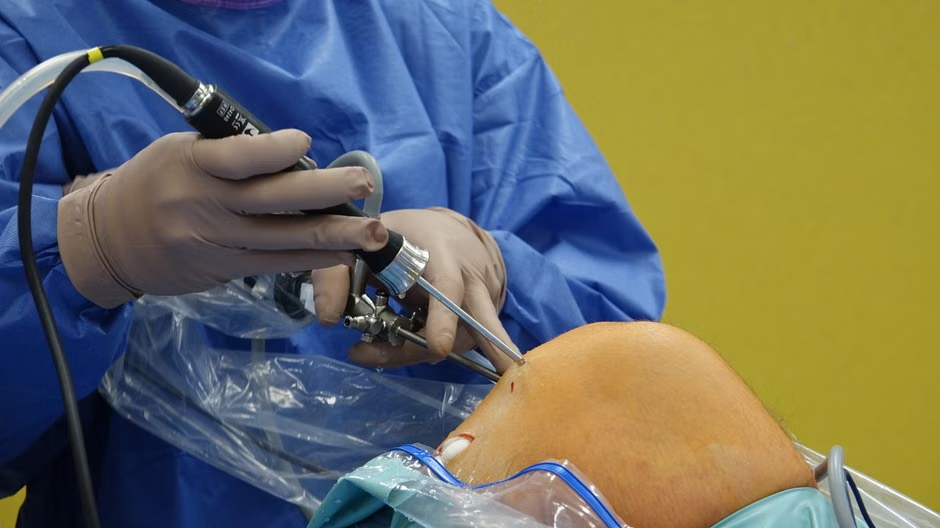
For meniscus tears, many partial tears heal with physical therapy and time. Surgery becomes relevant when there’s a complete bucket-handle tear causing mechanical locking, or when a repairable tear in a younger patient hasn’t responded to conservative care. For ACL injuries, reconstruction is typically recommended for active patients whose instability limits daily activity. Some individuals manage well without surgery depending on age, activity level, and the degree of instability.
For osteoarthritis, the typical progression is: activity modification and physical therapy first, then injections, then if those fail, a surgical consultation. Total knee replacement is considered when bone-on-bone arthritis causes constant pain and significant functional limitation that hasn’t responded to other treatments.
“Knee replacement surgery is one of the most successful procedures in orthopedic medicine, but it is most appropriate after conservative options have been exhausted and quality of life is substantially affected.”
What to Expect from Knee Ache Treatment: A Realistic Timeline
Recovery timelines vary widely depending on the diagnosis. Here’s a general framework based on evidence-based clinical guidelines:
- Minor meniscus strain or partial tear: 4 to 8 weeks of physical therapy, with most patients returning to normal activity within 6 weeks
- ACL reconstruction: 9 to 12 months to full sport-level recovery, though many resume low-impact activity within 3 to 4 months
- Osteoarthritis (Stage 1 to 2): 6 to 12 weeks of physical therapy typically produces measurable improvement in pain and mobility
- Osteoarthritis (Stage 3 to 4) with injection therapy: Relief lasting 3 to 6 months per cycle, not a permanent solution
- Total knee replacement: Most patients walk with assistance within 1 to 2 days; full recovery takes 3 to 6 months
These timelines assume consistent follow-through with rehabilitation. Returning to activity too soon, skipping physical therapy sessions, or ignoring early warning signs extends recovery significantly. Jean Terry, who leads clinical education at BioSyntrx, notes that patients who come in for evaluation early consistently have more treatment options available and shorter overall recovery periods.
Practical Steps If Your Knee Is in Pain Right Now
Before a formal diagnosis, there are steps that help and steps that hurt. The following are based on standard orthopedic guidance for acute and subacute knee pain:
- Rest and reduce load: Avoid activities that worsen pain. You don’t need complete bed rest, but high-impact movement makes most knee injuries worse before evaluation.
- Apply ice during the first 48 hours: 15 to 20 minutes several times daily reduces acute inflammation. After 48 hours, heat is often more effective for stiffness.
- Elevate the limb when resting: Keeping the knee above heart level reduces swelling after acute injury.
- Use over-the-counter anti-inflammatories cautiously: Ibuprofen or naproxen help with pain and swelling short-term. Don’t let them mask persistent pain and delay evaluation.
- Avoid self-selecting a brace: A brace chosen without clinical guidance may support the wrong structure or create false confidence to keep moving when rest is needed.
- Schedule an evaluation if pain persists beyond two weeks: Recurring swelling, locking, instability, or pain that doesn’t improve with rest are all reasons to see a specialist sooner.
You can also review the full range of diagnostic and orthopedic services at BioSyntrx Medical Center to understand what a clinical evaluation involves before you book an appointment.
Knee pain rarely resolves on its own when a structural cause is involved. Whether you’re dealing with a sports injury, a gradual ache that’s gotten worse over the past year, or swelling that keeps returning, the right path forward starts with knowing what you’re actually dealing with. At BioSyntrx Medical Center, our orthopedic team provides the clinical precision to tell the difference and the coordinated care to treat it correctly. If your knee is in pain, don’t keep waiting to see if it gets better on its own. Get the evaluation, get the answer, and start moving forward with a plan that’s built for your specific condition.
