

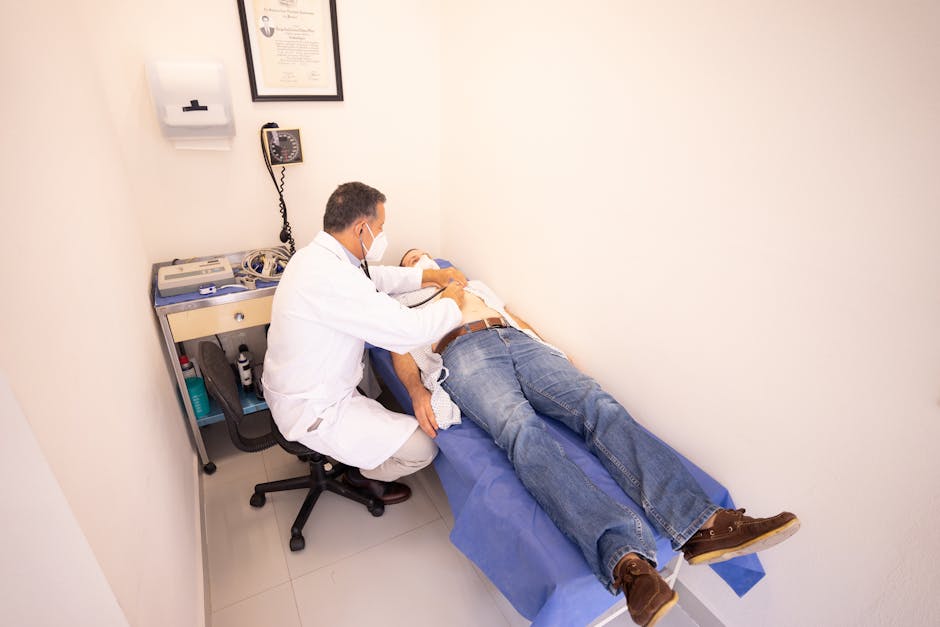
A patient rolls over in bed at 2 a.m. and the ceiling seems to spin so hard they grab the headboard to keep from falling out. The episode lasts only twenty seconds. Then it stops. But the next time they tilt their head back over the following week, the spinning returns. This pattern of brief, position-triggered episodes is the hallmark of vertigo, and it's far more specific than the catch-all term "dizziness" suggests.
What vertigo actually feels like and how it differs from dizziness
Vertigo is the specific illusion that you or your surroundings are moving or spinning. That sensation is distinct from lightheadedness, faintness, or general unsteadiness that patients often lump together under the broader term dizziness. Clinicians listen carefully for that spinning quality because it fundamentally changes how we approach diagnosis.
Think of dizziness as an umbrella term covering many types of imbalance. Vertigo sits beneath it, but it signals something particular: a problem in the vestibular system. That system lives in your inner ear and constantly tells your brain where your head is in space. When it sends false signals, your brain receives conflicting information. The result feels real enough to make you reach for something to steady yourself, even though nothing in the room is actually moving.

Vertigo is a symptom, not a diagnosis. Identifying its underlying cause is the first step in accurate diagnosis. Clinicians divide vertigo into two broad categories based on where the problem originates. Peripheral vertigo arises in the inner ear or the nerve connecting it to the brain. Central vertigo points to an issue in the brainstem or cerebellum. This distinction matters enormously because the two types call for entirely different evaluation and treatment paths.
"Vertigo is not a disease itself, but a symptom of an underlying condition, most often related to a problem in the inner ear."
Benign paroxysmal positional vertigo, or BPPV, is the most common cause of vertigo evaluated in outpatient clinics. It accounts for roughly one-third of all vertigo cases. That means it's far more frequent than vestibular neuritis or Meniere's disease combined. Despite how disorienting it feels, "benign" here reflects the reality that BPPV is not dangerous and responds well to specific treatment when correctly diagnosed.
Why the inner ear triggers a spinning sensation
Your inner ear contains a marvel of biological engineering. Three fluid-filled semicircular canals sense rotation in different directions. Two other structures, the utricle and saccule, sense gravity and linear acceleration like the forward lurch when you accelerate in a car. All of this works through specialized sensory cells that detect movement of fluid and tiny sensory hairs. It's how you keep your balance when your eyes are closed, how you land safely from a jump, and how you know which way is up in a dark room.
Embedded in the utricle are microscopic structures called otoconia. These calcium carbonate crystals are supposed to stay right where they are, nested in a gelatinous matrix. But sometimes they break loose. When they drift into a semicircular canal, they create a problem. In roughly 85 to 90 percent of BPPV cases, they end up in the posterior canal, the most common location.

Here's what happens next. When your head changes position, the displaced crystals shift inside the canal and physically move the fluid around them. Your brain interprets this motion as rotation of your head and body. But your eyes send a different signal: you're not moving. This sensory conflict creates the spinning sensation you feel.
An important detail: because the effect depends on gravity acting on loose crystals, BPPV episodes are brief. Most last under 60 seconds. They stop as soon as you stop moving, because gravity stops pulling the crystals through the canal. The spinning doesn't appear spontaneously at rest. It triggers with specific head movements. That pattern is how we narrow down BPPV among other causes of vertigo.
What causes BPPV, and what else causes vertigo?
BPPV often develops with no clear trigger. Many patients have no memory of head trauma or illness. Risk does climb after age 50. It also increases after head trauma, prolonged bed rest, or inner ear surgery. But plenty of people experience BPPV without any obvious cause, suggesting that otoconia can break loose simply as part of aging in the inner ear.
Other causes of vertigo follow different patterns. Mayo Clinic notes that BPPV is the most common cause of vertigo, and vestibular neuritis typically develops one to two weeks after a viral upper respiratory or ear infection. With vestibular neuritis or labyrinthitis, inflammation swells the vestibular nerve or the inner ear structures themselves. Unlike BPPV, these conditions often cause hours or days of continuous vertigo rather than brief episodes.
Meniere's disease produces a different pattern still. Vertigo episodes in Meniere's last 20 minutes to several hours, paired with fluctuating hearing loss, tinnitus (a ringing in the ear), and a feeling of fullness inside the ear. The cause is excess fluid building up in the inner ear spaces. Vestibular migraine, another common cause, ties vertigo episodes to a personal or family history of migraine. Interestingly, some people with vestibular migraine experience vertigo without any headache at all.
What are the BPPV symptoms and vertigo signs to watch for?
BPPV episodes are remarkably consistent in how they start. They trigger with specific head movements. Rolling over in bed ranks high on the list. Tilting the head back to look at a high shelf or ceiling does it. Bending forward to tie a shoe or pick something up can provoke it. Some people report an episode when a barber tips the chair back during a shampoo.
A typical BPPV episode lasts 20 to 60 seconds and resolves once the head stops moving or you remain still long enough for the crystals to settle. A residual queasy feeling or mild unsteadiness can linger for minutes or even hours after the spinning stops, but the room stops spinning within a minute.
Clinicians look for a specific sign during an office evaluation called nystagmus. This is an involuntary rhythmic eye movement that appears when the displaced crystals shift the fluid in the canal. Our clinical educator Jean Terry and other members of our team watch for this sign to confirm which canal is affected. The direction and timing of that eye movement guide how we position you during treatment.
BPPV does not cause hearing loss, tinnitus (ringing in the ears), or a feeling of ear fullness. If those symptoms appear alongside vertigo, they point toward Meniere's disease or labyrinthitis instead.
- Rolling over in bed, especially to one side
- Tilting the head back to look up
- Bending down and then straightening up quickly
- Lying back in a dental or barber's chair
- Turning the head side to side while lying on your back
- Getting out of bed or rising from a chair too quickly
How do you treat benign paroxysmal positional vertigo (BPPV)?
The Epley maneuver stands as the gold standard treatment for BPPV. It's a sequence of four careful head and body position changes performed right in the office. The goal is to guide those displaced crystals back into the utricle, where they no longer trigger vertigo. The maneuver works with gravity and the physics of the inner ear canal to move the crystals safely out of the way.
"The Epley maneuver is effective in treating BPPV in about 80 percent of cases, and repeating the maneuver can resolve symptoms in nearly all remaining patients."
A single Epley treatment resolves symptoms in roughly 80 percent of patients. For patients who still have symptoms after one session, a repeat in-office maneuver raises the success rate further. After treatment, some patients feel immediate relief. Others notice the spinning episodes fade over the next few days.
The Semont maneuver offers an alternative repositioning technique for patients who cannot tolerate the standard Epley positions. This might include people with limited neck mobility, severe arthritis, or other physical constraints. The Semont uses different head positions to accomplish the same goal of guiding crystals back to the utricle.
Brandt-Daroff exercises are a set of home exercises used after repositioning treatment to help your brain adapt to any residual unsteadiness. These exercises involve repeatedly moving from sitting to lying on each side in a specific sequence. They don't fix the crystal displacement, but they help your central nervous system compensate.
Vestibular suppressant medications such as meclizine can ease nausea and dizziness during an acute episode. But here's the key point: medication does not correct the crystal displacement causing the vertigo. A repositioning maneuver addresses the root cause. Medication only manages the symptom while you wait for an appointment.
Other reasons for dizziness that are not true vertigo
Not every patient who reports "dizziness" or "the room spinning" actually has vertigo. Distinguishing true vertigo from other causes of imbalance is essential because the treatment paths diverge completely.
Orthostatic hypotension occurs when blood pressure drops when you stand up. Common culprits include certain medications and dehydration. The sensation is lightheadedness or faintness rather than a spinning sensation. Your vision might darken slightly, or you might feel faint. If you manage this by adjusting a medication or drinking more water, a repositioning maneuver won't help because there's no crystal displacement to address. In our practice at BioSyntrx, patients sometimes describe this lightheaded feeling as dizziness, which is why we ask detailed questions about the exact sensation and when it occurs.
Hypothyroidism, an underactive thyroid, can produce fatigue, mental fog, and a feeling of being off-balance that patients sometimes interpret as dizziness. The cause is metabolic, not mechanical. Treatment means addressing the thyroid hormone level, not repositioning crystals.
Cardiac arrhythmias, or irregular heart rhythms, reduce blood flow to the brain momentarily and create a sensation of near-fainting or lightheadedness rather than true vertigo with a spinning sensation. Managing the heart rhythm through medication or other cardiac interventions is the correct treatment path.
Distinguishing these causes from BPPV matters fundamentally because the treatment is entirely different. Adjusting blood pressure medications, managing a heart rhythm, or treating an underactive thyroid won't stop the room from spinning if BPPV is the cause. Conversely, a repositioning maneuver won't help if lightheadedness is coming from your cardiovascular system or endocrine glands. Accurate diagnosis ensures you receive the right treatment.
Red flags that mean dizziness needs emergency care
Most cases of BPPV are benign and urgent only in the sense that they're miserable. But some patterns of vertigo and dizziness signal a serious problem requiring immediate evaluation.
Call emergency services or go to the nearest emergency department if vertigo appears alongside a sudden severe headache, double vision, slurred speech, facial drooping, or weakness in an arm or leg. The CDC notes that these warning signs can indicate a stroke affecting the brainstem or cerebellum. A stroke in these regions can damage the structures that control balance and coordination.
Clinicians use a bedside test called the HINTS exam, which stands for Head Impulse, Nystagmus, and Test of Skew, to help distinguish a benign inner-ear cause of vertigo from a dangerous central one right in the emergency department. This quick assessment guides whether you need urgent imaging or can be safely sent home with reassurance and a referral to neurology.
Balance and gait changes can also come from progressive nerve conditions such as peripheral neuropathy, which affects sensory feedback from the feet rather than the inner ear. These conditions develop gradually and affect walking pattern and balance in a way that's distinct from the brief spinning episodes of BPPV.
A coordinated evaluation with neurology lets our team assess for central causes while confirming or ruling out an inner-ear source in the same visit. This integrated approach is part of how BioSyntrx delivers patient-centered care across multiple specialties.
Does BPPV ever go away, and what makes vertigo worse?
BPPV often resolves after a successful repositioning maneuver. But it recurs in roughly half of patients within five years. One clear episode doesn't guarantee it's gone permanently. Understanding what happens after treatment helps you avoid unnecessary worry or unnecessary repeated testing.
You'll sometimes read older advice to stay completely still in bed for days after an episode. That guidance has changed. Extended bed rest is no longer recommended. In fact, it can delay recovery. Staying immobile for too long can lead to deconditioning and actually raises your fall risk when you do get up. Recovery goes better when you move gently and resume normal activity as tolerated within hours of the episode.
Movements that reliably provoke symptoms include looking up at a high shelf, bending down to pick something up, and quick head turns while driving or exercising. If you know your trigger movement, you can often anticipate and avoid it, or move slowly enough that the crystals don't shift suddenly.
During an active episode, here's what to do:
- Sit or lie down immediately to prevent a fall
- Avoid stairs and do not drive until the spinning has completely stopped
- Clear your floors of rugs, clutter, or throw pillows that create a tripping hazard
- Move slowly and deliberately for the next 24 to 48 hours as your brain adapts to any lingering unsteadiness
- Stay hydrated, as dehydration can worsen dizziness from any cause
- Avoid sudden head movements or position changes, even small ones

Persistent or recurring vertigo deserves an accurate diagnosis rather than guesswork. BPPV, vestibular neuritis, and central causes each call for a different treatment path. Waiting and hoping it goes away might work if you're lucky, but it means living with uncertainty and risk of another episode without knowing what to do.
At BioSyntrx Medical Center, our neurology team coordinates with cardiology and other specialties. That means one visit can address both your inner ear and any related medical issues that might contribute to dizziness. We've built our practice on evidence-based medicine and clinical precision because your diagnosis matters. When you're ready to understand what's causing your vertigo and get relief, schedule an evaluation at BioSyntrx Medical Center. Clear communication between you and your healthcare provider is essential, and that starts with an accurate assessment of what's happening in your inner ear.
